Scaling VMS for operational complexity
PO, PM, Developers, UX Researcher, QA
Context
We were building a modern Visitor Management System integrated with access control, building security, and internal administrative tools. As the product evolved beyond MVP, security personnel needed visibility into a broader set of visitor types.
As the Product Designer, I had to rethink the core visitor experience so the system could support real operational workloads at scale.
Problem
Stakeholder interviews revealed that the client needed to manage far more than personal visitors. Their operations involved commercial contractors, subcontractors, internal employees, and the more complex workflows tied to each group. The MVP’s basic visitor model couldn’t support these requirements.
Approach
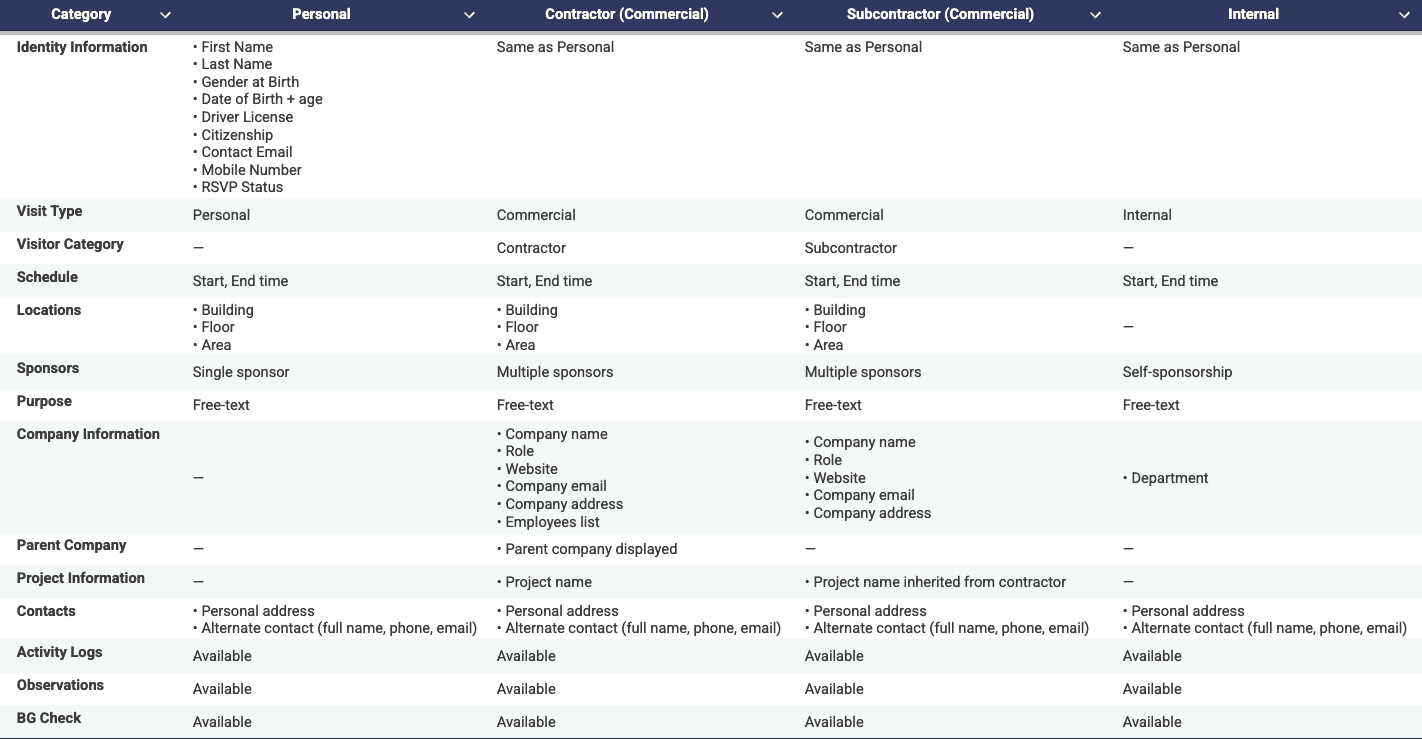
To understand real user needs, we interviewed the three user groups who run daily security operations. They confirmed the need to fully support four visitor types, each has different metadata, risk levels, and verification logic:
Personal — simple one-off guests
Contractor — vendors hired by the base
Subcontractor — vendors hired by contractors
Internal — employees
To clarify how different visitor types should be structured, I created a role-driven hierarchy diagram that aligned design, engineering, and security teams on a shared understanding of the data model.
Later, I mapped the end-to-end happy path across Sponsor, Security Manager, BCO and Gate Guard workflows. This revealed how information moves through the system and where role-specific data is required for accurate decision-making.
Final design
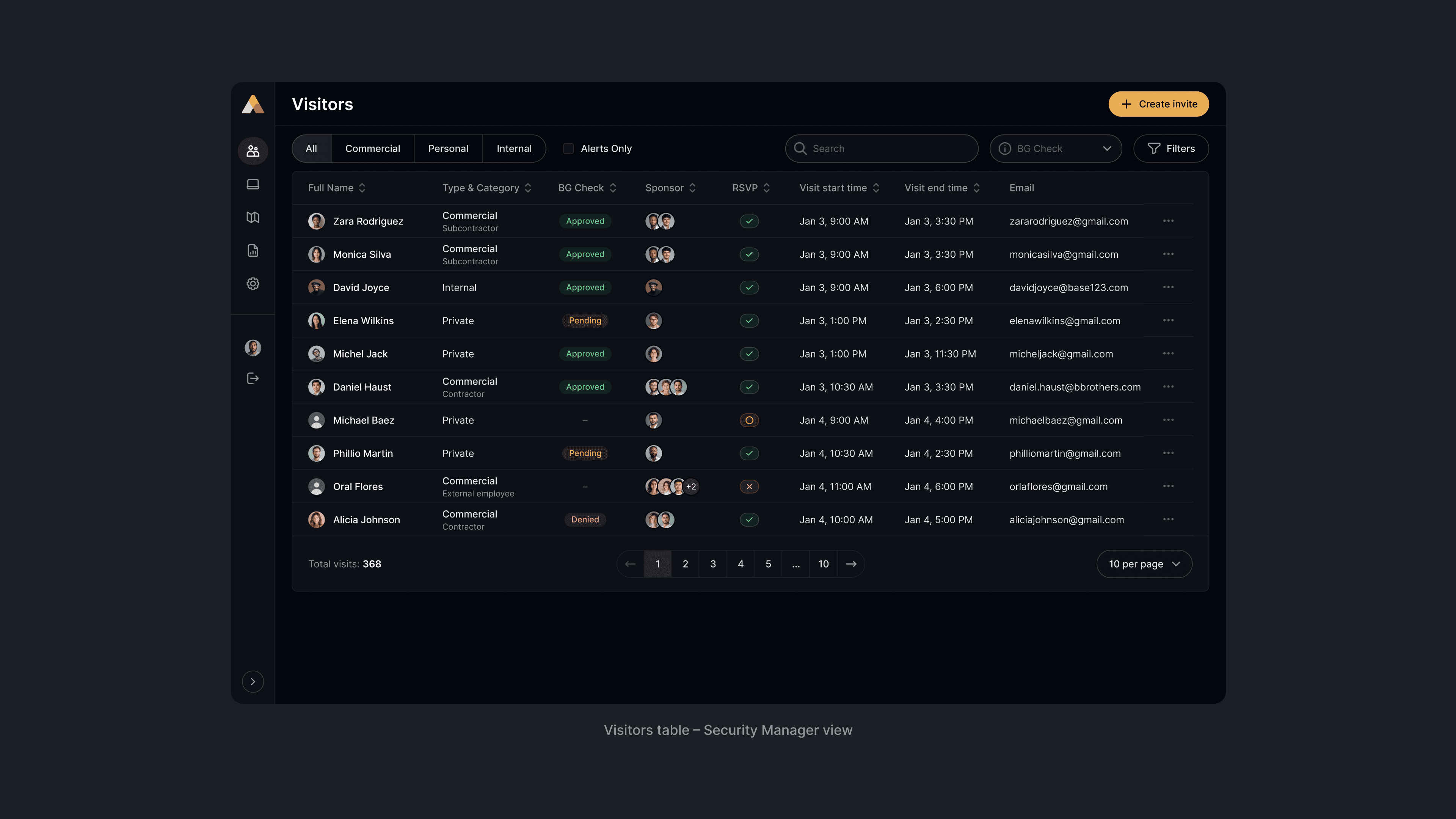
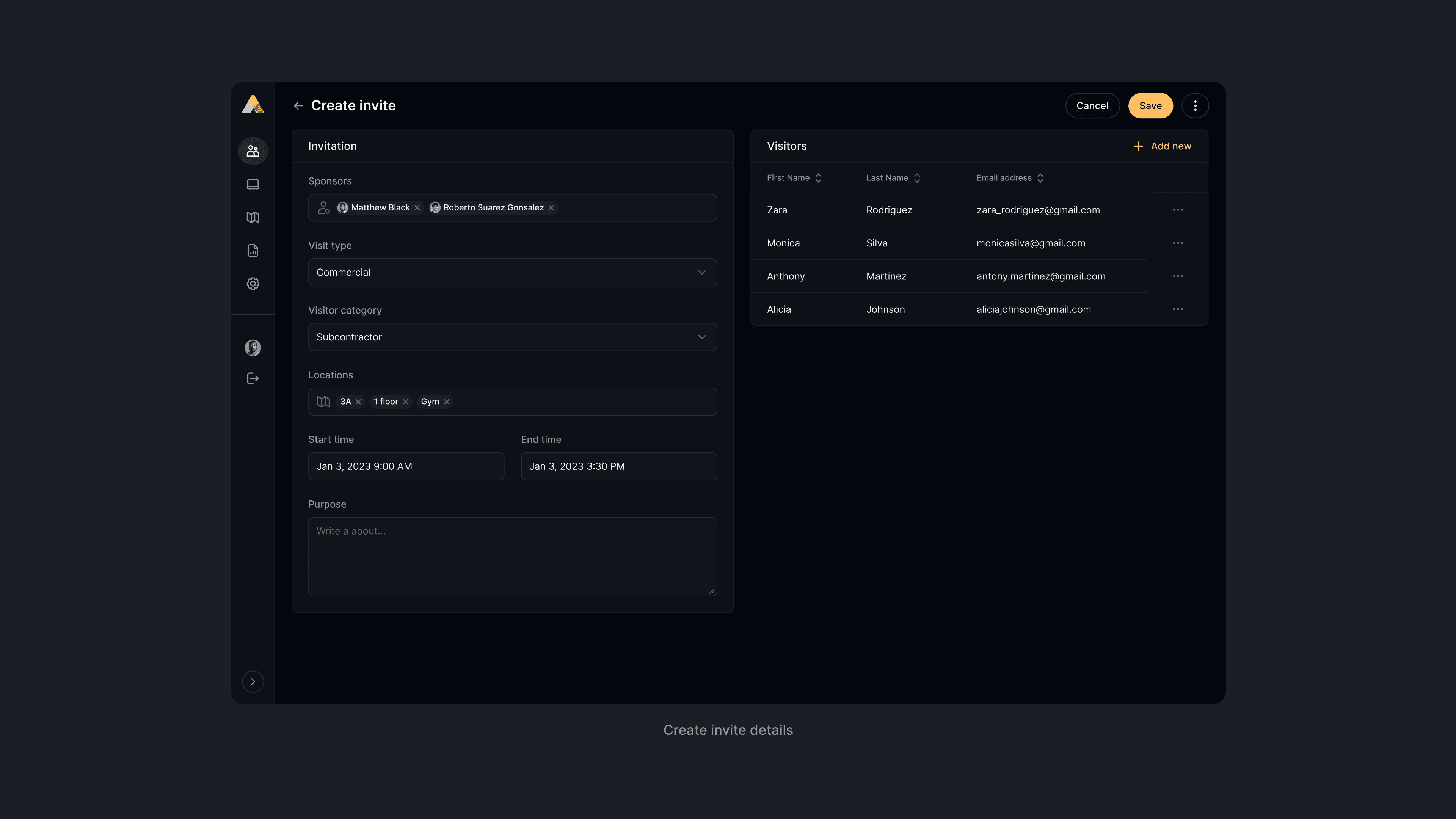
The invitation flow begins in the Visitors Dashboard, where a Sponsor or Security Manager creates a new visit, selects the appropriate visitor type, fills in the required role-specific information, and adds the visitors.
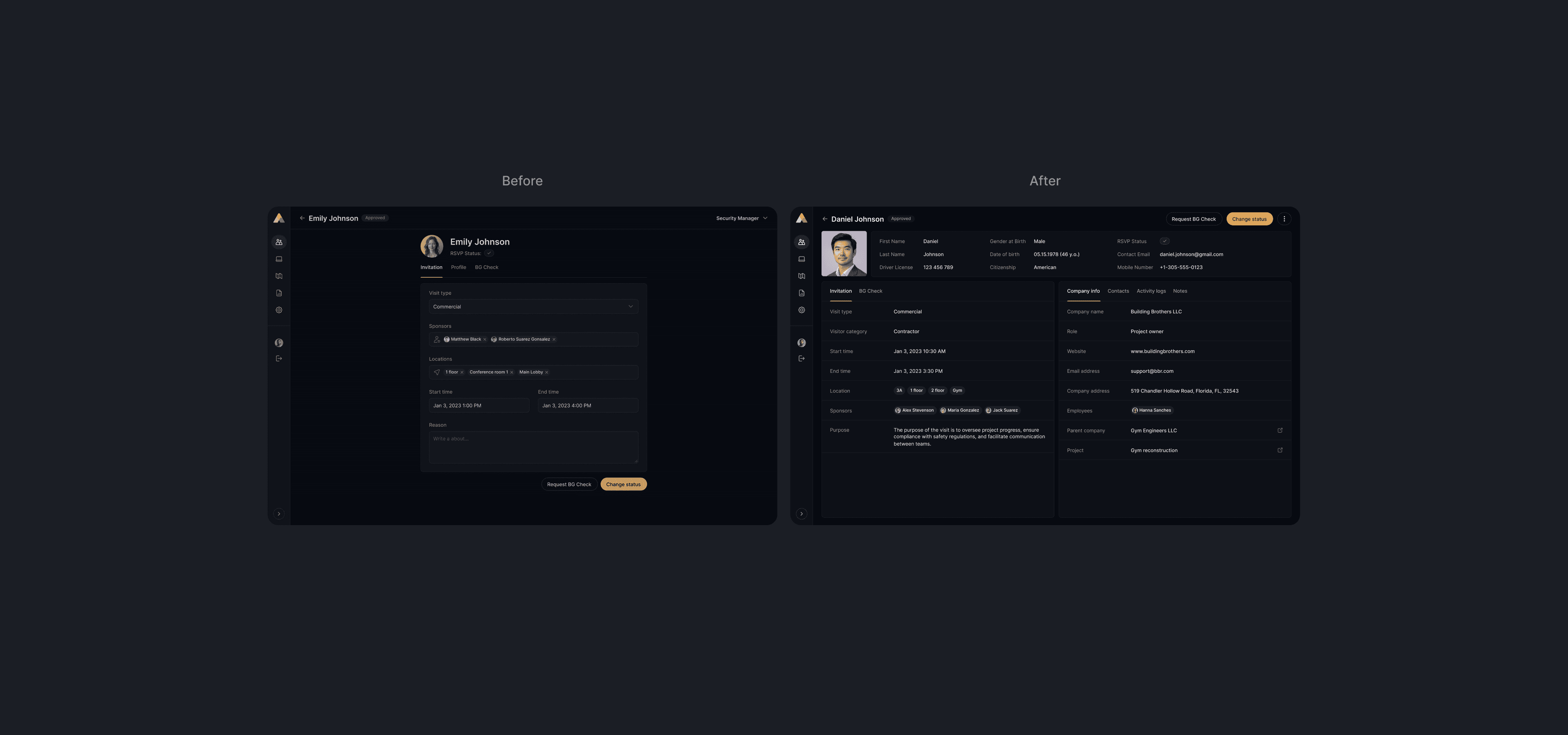
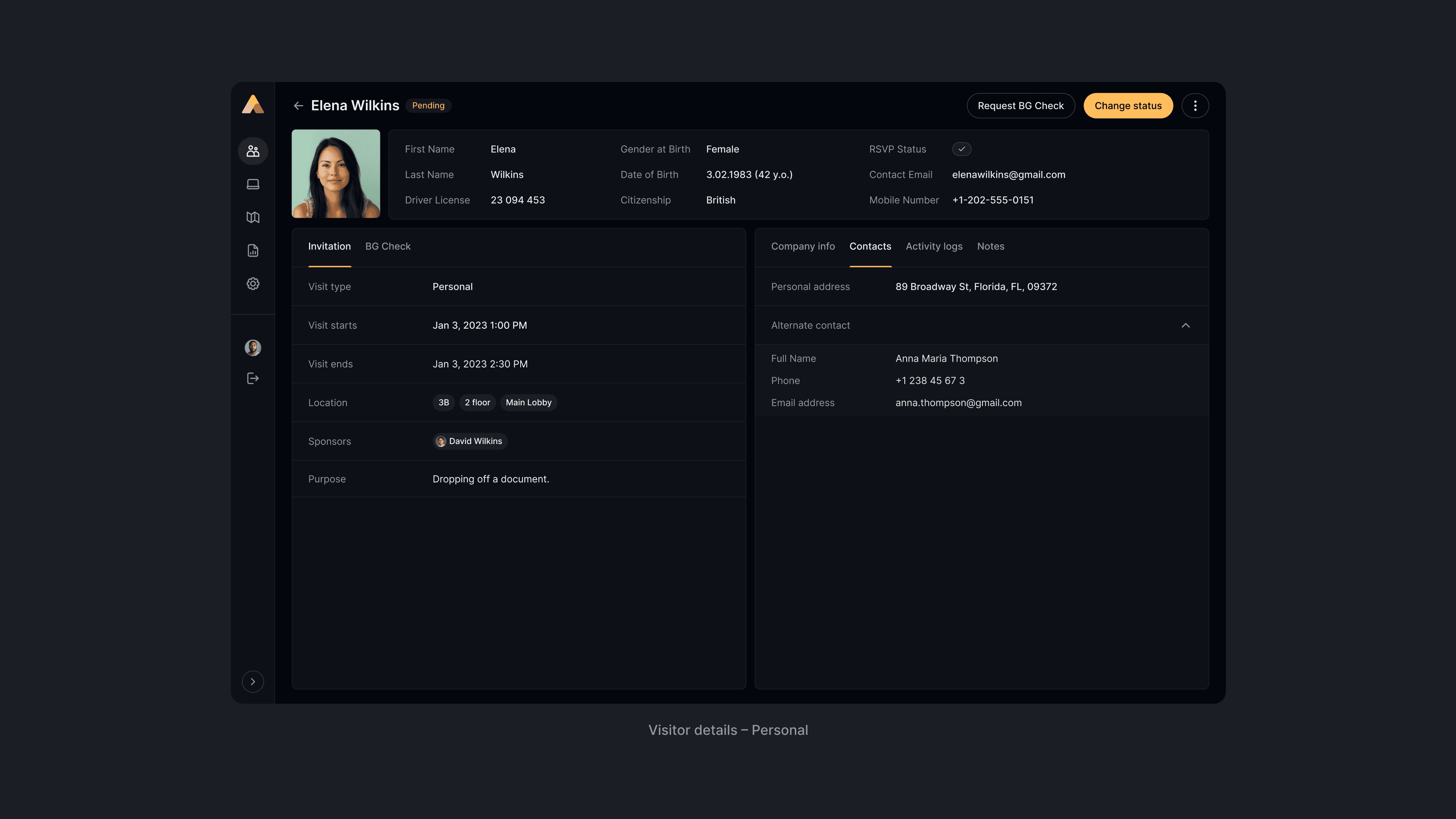
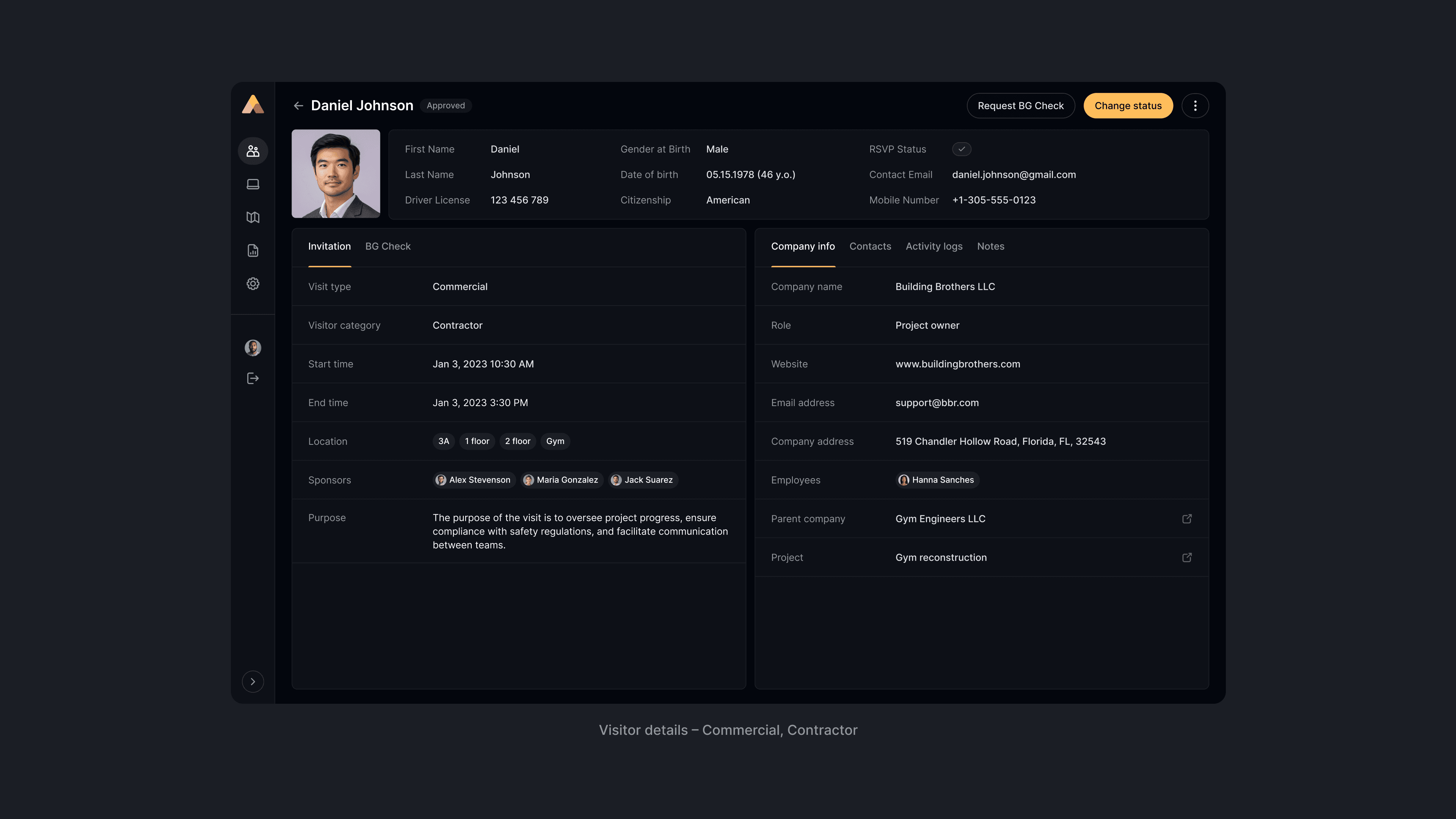
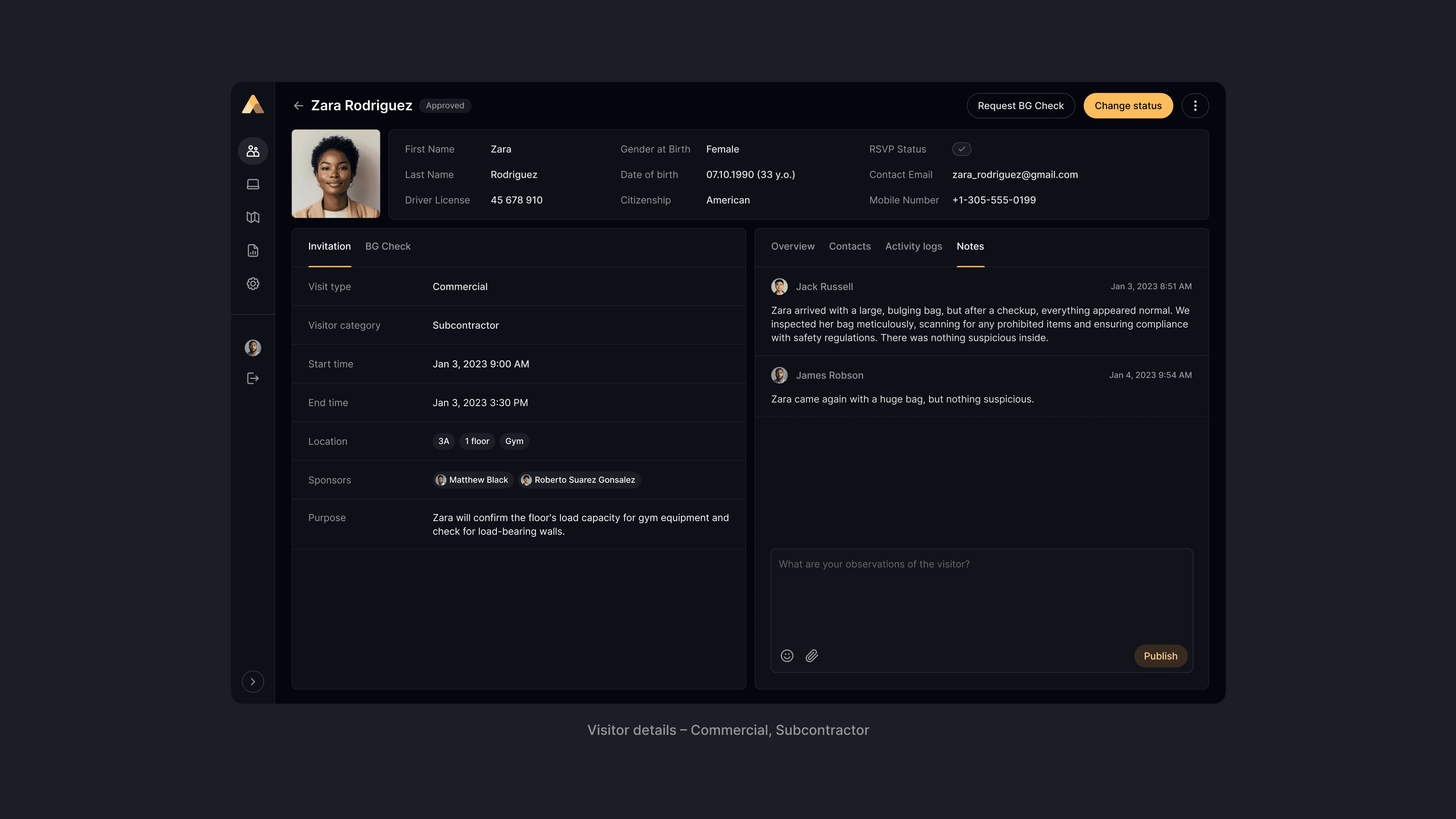
The screens below highlight the differences across visitor types, showing how Personal visitors require only basic identity and contact details, while Contractors and Subcontractors include company metadata, project assignments, and parent-company relationships.
Results
I scaled the VMS from a simple visitor list to a role-aware operational dashboard. By redesigning the table and Visitor Details, I enabled the system to support commercial and subcontractor workflows with clarity, accuracy, and speed.
This role-driven structure reduced incomplete submissions by 25%, shortened Security Manager review time by 30%, and enabled Background Check Officers to process visitors 20% faster by having all required context in a single, structured view.